
Chair-Based Exercises for People Living With Dementia
If you’re caring for someone with dementia, you’ll know that every day can be different. Some mornings start bright and full of energy, while others can be more of a struggle. But one thing that often helps, for both of you, is simple, joyful movement.
Dementia isn’t just about memory loss. It can also affect how a person speaks, thinks, feels and behaves, making everyday life more challenging for everyone involved. Chair-based exercise offers a safe, gentle way to move together, laugh together, and share small moments of success. It’s about loosening up stiff muscles and easing the mental tension that can build up over time.
Why Chair-Based Exercise Matters
In the UK, more than 944,000 people are living with dementia, and around 1 in 11 people over the age of 65 are affected. Dementia is not a natural part of ageing, but as people live longer, more families find themselves stepping into a caring role and looking for practical, positive ways to support their loved one day to day.
Traditional exercise classes can feel intimidating or simply impractical for people living with dementia. Balance might be an issue, and memory problems can make following complex routines frustrating.
Chair-based exercises for people with dementia remove those barriers while still delivering real benefits, helping to maintain mobility, support independence and reduce anxiety and agitation.
There’s also an emotional side. When someone with dementia moves their body to music, reaches their arms overhead, or completes a simple routine, they experience a sense of achievement and presence. They are still capable. They are still here. For carers, joining in can offer a rare moment to let go, breathe and feel part of something uplifting.
7 Gentle Chair-Based Exercises for People With Dementia
1. Seated Marching
Seated marching might look simple, but it’s brilliant for improving circulation and building coordination. Sit tall in a sturdy chair, then lift each knee one at a time, as though marching to your favourite song.
Encourage your loved one to join in with the rhythm. You could even clap along or count the beats together. This kind of rhythmic movement can help spark memories, reduce restlessness, and increase engagement in people with dementia.
Benefits: Boosts blood flow, strengthens leg muscles, and improves focus through repetition.
2. Gentle Arm Raises
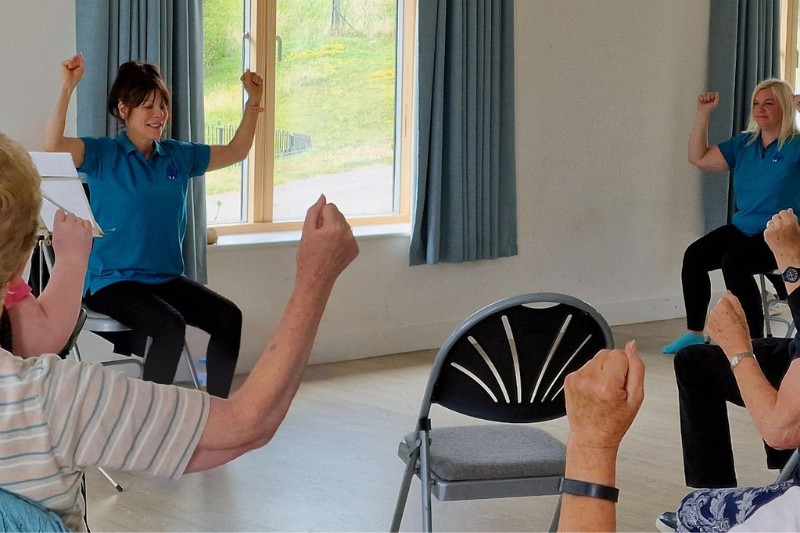
From reaching for the stars to pretending to hang washing on a line, arm raises can be fun, creative, and easy to adapt. With feet flat on the floor, lift both arms slowly above the head, then lower them back down.
Add a story to it: maybe you’re waving to neighbours or gently painting the sky. Little touches like this encourage imagination and conversation, which are just as valuable as the physical movement itself.
Benefits: Enhances shoulder mobility, encourages posture awareness, and invites positive engagement.
3. Seated Side Stretches
Few movements feel as instantly good as a slow side stretch. Sitting tall, place one hand on the side of your chair for balance. Reach your opposite arm up and over your head, leaning gently to the side. Take a breath, then return to the centre.
It’s a lovely movement to do as a pair. Take turns, mirror each other, share a smile. Light stretching helps release tension in the torso and can improve breathing patterns, which is especially beneficial for relaxation.
Benefits: Loosens tight muscles, encourages deep breathing, and reduces feelings of stress.
4. Toe Taps and Heel Lifts
Keeping legs and ankles mobile is vital for maintaining balance and circulation. Toe taps and heel lifts are easy and ideal during television time or tea breaks. Sit tall, then alternate between lifting your toes and lifting your heels.
Some carers like to make it musical – tap those toes to a favourite old tune, or turn it into a mini “dance-off”! Movement combined with melody brings a sense of light-heartedness that can turn exercise into play.
Benefits: Improves ankle strength, supports mobility, and brings a sense of rhythm and joy to the session.
5. Shoulder Rolls
Dementia can sometimes make people unaware of tension building up in their shoulders and neck. Shoulder rolls gently release that tightness and provide a calming break during conversation or activity.
With the person seated comfortably, encourage small, slow rolls – first forwards, then backwards. To make it more interactive, try imagining you’re “painting circles in the air” with your elbows.
Benefits: Relieves tension, supports posture, and offers a gentle, calming activity for any time of day.
6. Seated Ball Pass
This one’s fantastic for building connection and laughter. Sit opposite your loved one and pass a soft ball or cushion back and forth. Vary the speed, say each other’s names, or share a joke as you go.
This kind of movement engages coordination, boosts concentration, and brings in moments of eye contact, which can be grounding and reassuring for someone experiencing memory confusion.
Benefits: Encourages coordination, memory recall, and social connection.
7. Singing and Stretching
One of the most powerful combinations for people living with dementia is music and movement. Play a well-loved song and introduce gentle arm movements, claps, or stretches that match the rhythm.
Singing stimulates language areas of the brain and can often unlock memories, while the movement keeps joints flexible and spirits high. The joy that comes through music is contagious; carers often find it lifts their own mood just as much.
Benefits: Enhances mood, supports memory, and deepens emotional connections.
Making It Part of the Day
You don’t need long exercise sessions to see benefits. Even 10–15 minutes of chair-based movement can make a real difference in mood, mobility, and social interaction.
Build it into daily routines. Perhaps after breakfast, as a mid-morning “energy top-up”, or as an afternoon wind-down activity. The key is creating a safe, comfortable, and encouraging environment.
Join a Seated Exercise Class With MOVEability
Although there is currently no cure for dementia, early support, meaningful activity, and connection can all help people live more active and fulfilled lives for longer. That’s where community-based movement and social prescribing come in.
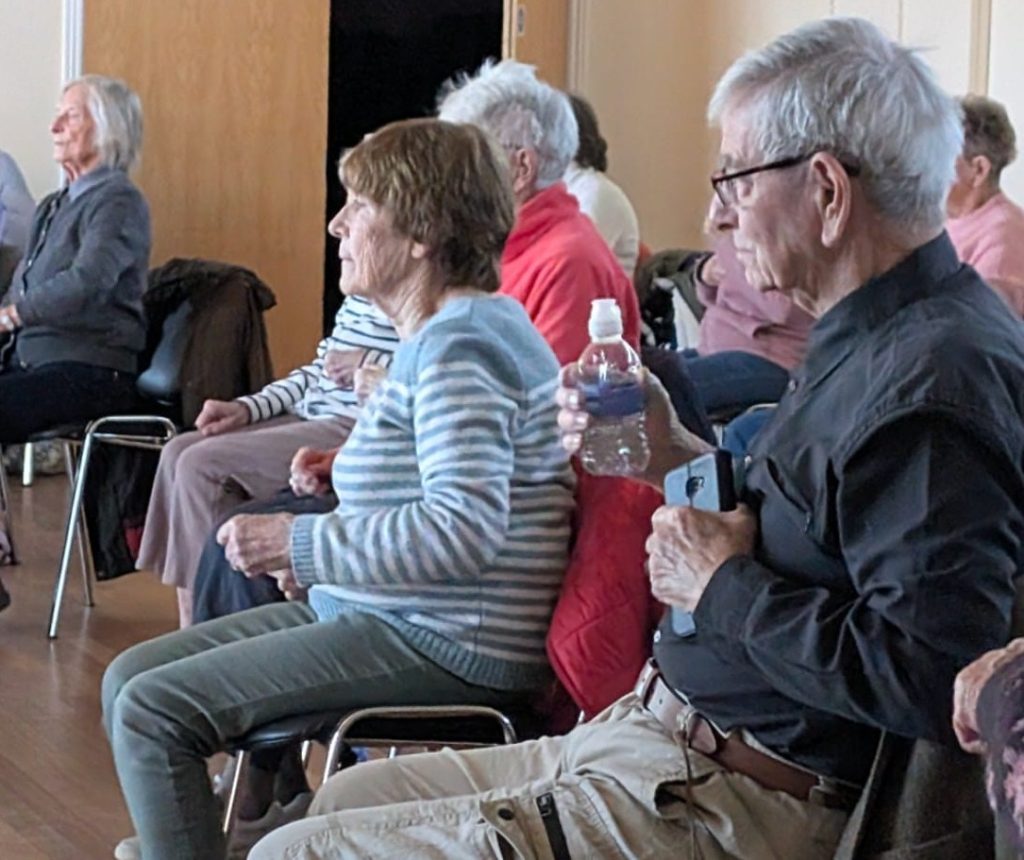
If you or someone you care for has dementia, join a MOVEability online exercise class or one of our in-person classes in Newbury, Berkshire and experience how good it feels to move, laugh, and loosen up again. Our sessions are friendly, supportive, and designed for all ages and abilities. There’s no fancy equipment needed, just a chair and the willingness to try. Sign up for a FREE MOVEability trial class today.
MOVEability offers a wide range of on-site and online seated exercise classes for people of ALL ages and abilities. We believe movement should be inclusive and fun for
Related Guides:
- Do chair exercises work?
- How to increase grip strength at home for seniors
- Resistance bands vs weights: which is better for older adults?
- 10 exercises to do while sitting
- 9 benefits of seated exercises
- 10 fun activities for elderly in care homes
- What chair to use for seated exercise?
- 6 tips to prevent falls in winter
- 10 seated exercises for seniors
- What is low impact exercise?
- What is online exercise?
- 10 reasons why socialising is important